

Getting your house valuation right in Scotland isn't just about picking a number that feels good. It's about understanding the market, respecting the process, and being honest about what your property is genuinely worth. Yet every week, homeowners across Scotland make the same mistakes, mistakes that cost them time, money, and sometimes the sale itself.
Whether you're in Edinburgh, Glasgow, or anywhere in between, these seven valuation errors crop up time and again. The good news? They're all fixable. Let's walk through each one and sort out how to get your valuation spot on.
1. Letting Emotion Drive the Price
We get it. Your home holds memories, first steps, family dinners, that kitchen you renovated during lockdown. But here's the difficult truth: buyers don't share your emotional connection. They're looking at square footage, condition, location, and comparable properties.
When you price based on sentiment rather than market reality, you're setting yourself up for disappointment. Your home might sit on the market for months while similar properties sell quickly at more realistic prices.
The fix: Separate your feelings from the facts. Look at recent sales of similar properties in your area. What did they actually achieve, not what they were listed at? Ground your expectations in data, not memories. It's not personal, it's property.

2. Ignoring Your Home Report Value
Here's one that's uniquely Scottish and surprisingly common: overlooking the valuation in your Home Report. In Scotland, you're legally required to have a Home Report before marketing your property, and it includes a surveyor's valuation.
Some sellers see a figure lower than they'd hoped and simply ignore it, ploughing ahead with a much higher asking price. Others don't bother reading it properly at all. But here's the thing, potential buyers will read it. And if there's a significant gap between your asking price and the Home Report valuation, they'll notice.
Mortgage lenders pay close attention to Home Report valuations too. If the surveyor has valued your property at £250,000 but you're asking £280,000, buyers may struggle to secure lending for the full amount.
The fix: Take your Home Report valuation seriously. If you genuinely believe it's too conservative, gather evidence, recent sales data, unique features, improvements since the survey, and discuss this with a local estate agent who knows your area. Don't just dismiss it because it doesn't match your expectations.
3. Over-Improving for Your Area
You've installed that stunning kitchen with the marble worktops. You've converted the loft into a home cinema. You've landscaped the garden like something from a magazine. Surely that adds tens of thousands to your property's value?
Not necessarily. While improvements can add value, they rarely return pound-for-pound what you've spent, especially if you've made your home significantly more luxurious than others in your neighborhood.
If you've got a £400,000 kitchen in a street where homes typically sell for £250,000, you've likely over-capitalised. Buyers looking in that price range often aren't prepared to pay a premium for high-end finishes, and those who want such features are usually shopping in different postcodes altogether.
The fix: Before undertaking major improvements, research what buyers in your area actually value. Sometimes a fresh coat of paint and good presentation deliver better returns than expensive renovations. If you've already over-improved, be realistic about pricing, you may not recoup your full investment, and that's just how property works sometimes.
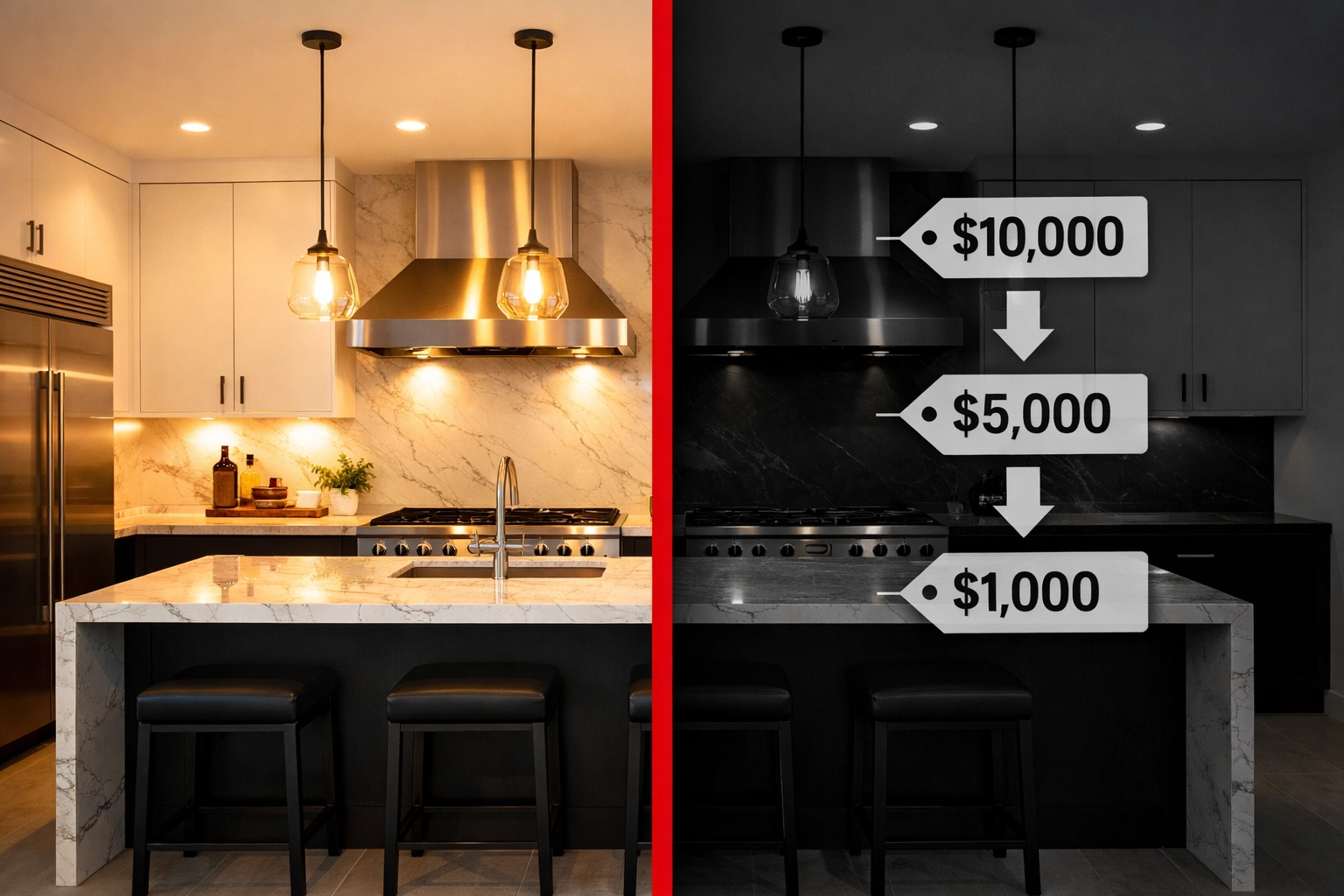
4. Getting Your Timing Wrong
The Scottish property market isn't static. It shifts with seasons, economic conditions, interest rates, and local factors. Valuing your home without considering where we are in the market cycle is like trying to catch a train without checking the timetable.
Perhaps you're pricing based on what your neighbor achieved 18 months ago, but interest rates have since risen and buyer demand has cooled. Or maybe you're being overly cautious when the market is actually strong and homes are achieving above their asking prices.
Market timing affects more than just price, it influences how quickly you'll sell and how much negotiating power you'll have.
The fix: Stay informed about current market conditions, not just in Scotland generally but in your specific area. Spring typically sees increased activity, while the market often quiets over winter. Local economic factors matter too, new developments, transport links, or employment changes can all affect demand. An experienced local agent will help you understand these nuances and time your sale strategically.
5. Skipping the Comparables Research
"My neighbor sold for £300,000, so mine must be worth the same." Well, maybe. Or maybe their property has an extra bedroom, better condition, a garden twice the size, or they sold in a stronger market.
Failing to properly research comparable sales: or "comps" as they're known: leaves you guessing. You might be wildly optimistic or, occasionally, undervalue your property. Either way, you're not making informed decisions.
The fix: Do your homework. Check sold prices (not just asking prices) for similar properties in your area over the past 3-6 months. Look at properties with similar size, condition, features, and location. The KW Scotland listings can give you a sense of current market activity, but dig deeper into actual achieved prices through the Registers of Scotland or property websites that show sold data.

6. Overestimating Your DIY Improvements
You've spent weekends painting, installed new light fittings, re-grouted the bathroom, and built raised beds in the garden. You've put heart and soul into these improvements, so surely they've added significant value?
The reality is that DIY improvements rarely add as much value as professional work, and some might not add value at all if they're not to a potential buyer's taste. That feature wall in electric blue? The buyers might be mentally calculating how much magnolia paint they'll need to cover it.
The fix: Be honest about the quality and appeal of your improvements. Professional renovations of key areas: kitchens, bathrooms, heating systems: typically add more value than cosmetic DIY touches. If you're planning improvements before selling, focus on presentation rather than personalization: neutral décor, good repair, and cleanliness often deliver the best return on investment.
7. Going It Alone Without Professional Input
Perhaps the biggest mistake? Thinking you can accurately value your property without professional help. You might have lived there for years, watched the market, chatted to neighbors about prices. But unless you're actively working in the property market, you're missing crucial information.
Professional valuers and estate agents see dozens of properties every month. They know what buyers are actually paying, not just asking. They understand local market subtleties: which streets command premiums, which features buyers in your area prioritize, how quickly properties at different price points are moving.
The fix: Get a professional appraisal from a qualified local estate agent. At Keller Williams Scotland, our agents live and work in the communities they serve. They can provide an objective, data-driven valuation that accounts for current market conditions, your property's specific features, and realistic buyer expectations.
A professional valuation doesn't cost you anything, and it could save you from months on the market at the wrong price: or worse, underselling your property because you didn't understand its true worth.
Getting It Right From the Start
Valuing your Scottish property accurately isn't about finding the highest number you can justify. It's about understanding true market value: what a willing buyer will actually pay in current conditions. Get it right, and you'll attract serious buyers quickly, negotiate from a position of strength, and achieve the best possible outcome.
Get it wrong, and you'll watch weeks turn into months while your property sits unsold, eventually requiring a price reduction that signals desperation to potential buyers.
The mistakes we've covered here are common, but they're not inevitable. With proper research, professional guidance, and a realistic approach, you can avoid them all. If you're thinking about selling and want an honest, expert valuation of your property, reach out to the team at KW Scotland. We'll help you understand exactly what your home is worth: and why.
Leave a Reply